
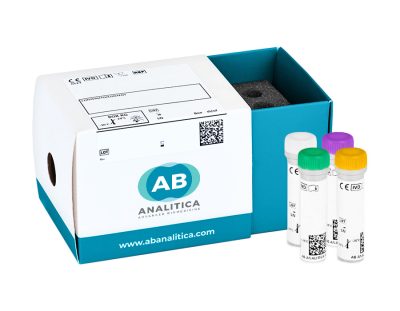
REALQUALITY RQ-BCR-ABL p190 One-Step
REALQUALITY RQ-BCR-ABL p190 One-Step Detection of the t(9;22) p190 Translocation Using One-Step Real-Time RT-PCR
The REALQUALITY RQ-BCR-ABL p190 is a highly accurate and reliable molecular diagnostic kit developed by the Italian company AB Analitica.
It is specifically designed for the detection and quantification of p190 transcripts using a One-Step Real-Time RT-PCR method.
This kit is particularly useful in the diagnosis of Acute Lymphoblastic Leukemia (ALL) and for monitoring Minimal Residual Disease (MRD).
Key FeaturesREALQUALITY RQ-BCR-ABL p190 One-Step :
-
Developed in accordance with international standards and “Europe Against Cancer” protocols
-
Requires only 5 µL of extracted RNA
-
Includes an internal fluorescent normalizer and a dUTP/UNG system to prevent contamination
-
Shares a thermal profile with the RQ-BCR-ABL p210 kit, allowing parallel testing
-
Compatible with major Real-Time PCR platforms
🇮🇷 Exclusive Distributor in Iran:
Fardad Azma Rad Co. is the exclusive representative of AB Analitica in Iran,
offering this product with full authenticity guarantee, expert consultation, and technical support.


There are no reviews yet.