🔬 Why Laboratory Kit Quality Matters: A Review of Standards and Their Impact on Results Introduction The quality of laboratory diagnostic kits is a critical factor in achieving accurate and reliable results in both clinical diagnostics and scientific research.Fardad Azma Rad, a leading importer of laboratory kits in Iran, offers high-quality diagnostic solutions from reputable […]
🔬 Why Laboratory Kit Quality Matters: A Review of Standards and Their Impact on Results
Introduction
The quality of laboratory diagnostic kits is a critical factor in achieving accurate and reliable results in both clinical diagnostics and scientific research.
Fardad Azma Rad, a leading importer of laboratory kits in Iran, offers high-quality diagnostic solutions from reputable international brands such as AB ANALITICA, Biotechrabbit, and Diatech Pharmacogenetics.
In this article, we explore the importance of laboratory kit quality, key international standards, and their impact on diagnostic accuracy.
1. The Importance of Laboratory Kit Quality
High-quality laboratory kits directly impact the accuracy, sensitivity, and reproducibility of test results.
Not only do they minimize experimental errors, but they also reduce time and costs associated with repeat testing—especially in fields like genetic diagnostics, infectious disease detection, and cancer research.
Key Benefits of Quality Kits:
-
High Accuracy: Premium kits are manufactured using high-grade materials and stringent quality control processes to ensure result precision.
-
Greater Sensitivity: In techniques such as Real-Time PCR and Next-Generation Sequencing (NGS), sensitivity is crucial to detect low concentrations of DNA/RNA.
-
Reproducibility: Certified and standardized kits provide consistent and repeatable results—essential in both research and clinical settings.

2. International Standards for Diagnostic Kits
Global standards help ensure the safety, reliability, and effectiveness of laboratory kits. Key regulatory frameworks include:
a) ISO Certification
Standards like ISO 13485 apply to the manufacturing and quality management of medical devices, including DNA/RNA extraction kits and rapid test kits.
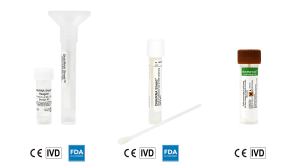
b) CE-IVD Mark
The CE-IVD label ensures compliance with European Union regulations for in-vitro diagnostic products. It is especially relevant for molecular diagnostic kits such as PCR-based assays and infectious disease panels.
c) FDA Approval
In the United States, diagnostic kits must be approved by the Food and Drug Administration (FDA). This certification is critical for cancer research kits, sequencing platforms, and clinical molecular diagnostics.
3. Impact of Kit Quality on Disease Diagnosis
a) Infectious Disease Diagnostics
High-quality molecular diagnostic kits (e.g., PCR or Real-Time PCR) are essential for detecting infectious diseases such as COVID-19.
These kits minimize the risk of false positives and false negatives, ensuring timely and accurate patient care.
b) Cancer Research
In oncology research, kits like NGS panels and mutation detection kits help identify genetic abnormalities that guide personalized treatment decisions.
Low-quality kits may lead to misdiagnosis or incorrect treatment selection, affecting patient outcomes.

4. Role of Kits in Scientific Research
In advanced techniques such as sequencing and NGS, kit quality is fundamental.
These kits must accurately detect trace amounts of DNA or RNA and support result reproducibility, which is critical for publishing peer-reviewed scientific articles and validating experiments.
5. Challenges of Using Low-Quality Kits
a) Inaccurate Results
Poor-quality kits may produce false positives or false negatives, especially dangerous in clinical diagnostics.
b) Higher Costs
Testing errors caused by unreliable kits often lead to repeat testing, resulting in wasted time, resources, and budget.
c) Damaged Lab Reputation
Using non-standard kits can damage the credibility of laboratories and research institutions, potentially affecting funding, partnerships, and compliance.
6. Conclusion
The quality of laboratory diagnostic kits plays a pivotal role in producing accurate and reliable results.
International standards such as ISO, CE-IVD, and FDA certifications provide assurance of quality and compliance.
Fardad Azma Rad supports accuracy and efficiency in diagnostics by importing premium laboratory kits from trusted global brands, including AB ANALITICA, Biotechrabbit, and Diatech Pharmacogenetics.
Whether in genetic diagnostics, infectious disease testing, or cancer research, using high-quality kits improves reliability, reduces unnecessary costs, and supports better outcomes.