
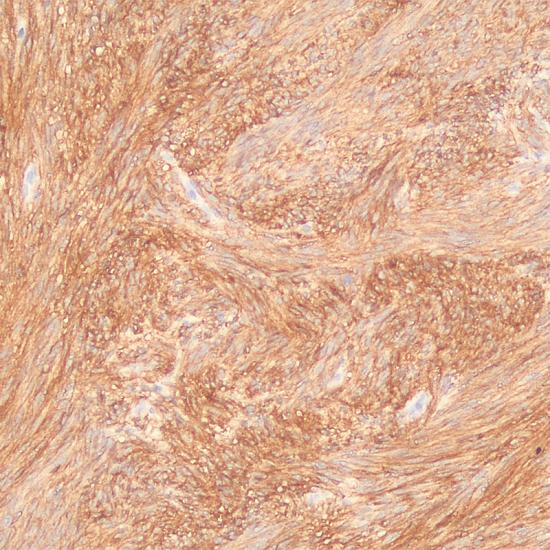
DOG-1 Antibody (Immunohistochemistry)
The DOG-1 Antibody is one of the most sensitive and specific immunohistochemical markers for diagnosing Gastrointestinal Stromal Tumors (GISTs).
The DOG-1 gene, located on chromosome 11q13, encodes a protein with eight transmembrane domains selectively expressed in GIST cells.
Unlike CD117 (c-Kit), DOG-1 remains positive even in CD117-negative GISTs, making it a superior marker for detecting these tumors.
In IHC staining, DOG-1 exhibits brown membranous and cytoplasmic staining, confirming its diagnostic value in differentiating GIST from other soft tissue and epithelial tumors.
🔬 Features and Benefits DOG-1 Antibody
-
Highly specific and sensitive marker for GIST
-
Positive even in CD117-negative GISTs
-
Clear brown membranous/cytoplasmic staining pattern
-
Compatible with FFPE tissues and DAB detection systems
-
Excellent stability: 18-month shelf life at 2–8 °C
💡 Diagnostic Applications
-
Detection of Gastrointestinal Stromal Tumors (GISTs)
-
Differentiation from leiomyoma, schwannoma, and other mesenchymal tumors
-
Research on transmembrane proteins and oncogenic pathways
🌐 Fardad Azma Rad Co.
Fardad Azma Rad Co., the exclusive representative of Talent Biomedical in Iran, provides high-quality immunohistochemistry antibodies, including DOG-1.
With a strong focus on scientific precision, diagnostic reliability, and international standards, Fardad Azma Rad supports pathology and molecular diagnostic laboratories throughout Iran.


There are no reviews yet.